
• GILBERT P. BAYORAN
Agriculture Secretary Francisco Tiu Laurel Jr. has committed to convening a stakeholders’ workshop to map out concrete survival strategies and reforms for the sugar industry.
This developed as producers, millers and workers grapple with the combined impact of the red-striped soft scale insect (RSSI), rising production costs, climate risks and other pressures.
Tiu Laurel made the commitment during a Sept. 24 meeting with the Confederation of Sugar Producers’ Associations (CONFED) and the National Congress of Unions in the Sugar Industry of the Philippines (NACUSIP), following discussions on the Sugar Council’s proposed “agenda for sugar industry survival and reform.”
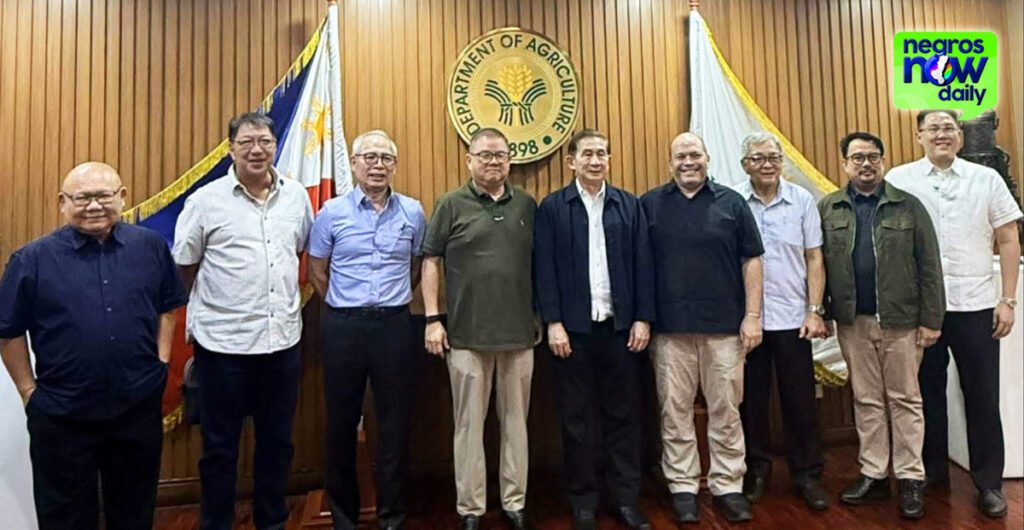
The agriculture chief, together with Agriculture Undersecretary Philip Lo and Sugar Regulatory Administration Administrator Pablo Luis Azcona, discussed measures aimed at addressing what industry representatives described as a “perfect storm” threatening the future of the sugar sector.
The proposed interventions cover four major areas, including competition from imported refined sugar, sugar substitutes and finished sugar-sweetened beverages; institutional, policy and marketing reforms; improving mill-sector efficiency; and raising farm productivity and ensuring the viability of sugarcane farmers.
Tiu Laurel agreed to convene and finance a stakeholders’ workshop at the earliest possible time to translate the proposals into specific programs, strategies and implementing mechanisms.
He also outlined possible Department of Agriculture (DA) assistance, including solar irrigation and water impounding systems, fuel subsidies for farm machinery operations, and support for laboratories to accelerate the production of biological control agents against RSSI.
The DA has previously directed its laboratories and the SRA to expand production of RSSI biocontrol agents, with Tiu Laurel stressing the need to make the technology more widely available to sugarcane farmers.
The l meeting came two days after congressional leaders led by Deputy Speaker Alfredo Abelardo Benitez brought together sugar industry stakeholders to discuss a draft executive order creating a Sugar Industry Pest and Disaster Management Task Force.
The proposed task force is intended to provide national leadership and coordination in responding to RSSI and other natural calamities affecting the sugar industry.
Benitez said the discussions were aimed at aligning government agencies and industry stakeholders, strengthening RSSI mitigation and building the sector’s resilience against climate-related disasters.
In a statement, CONFED president Aurelio Valderrama Jr. welcomed the outcome of the meeting, saying the dialogue provided an opportunity to move toward concrete solutions for the industry.
NACUSIP national president Roland de la Cruz said the productive discussions could now lead to actual measures addressing the problems confronting sugar producers and workers. | GPB