
• AIKEN EMMANUEL QUIPOT | Photos by Hersley Casero
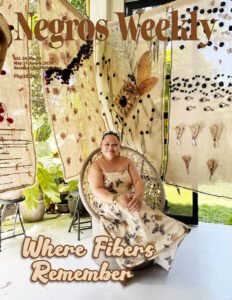
The gallery was quiet in the way meaningful spaces often are.
Not silent, exactly. There was the soft scrape of shoes against concrete flooring, the occasional murmur between visitors, the faint rustle of fabric as people moved from one artwork to another. But beneath those sounds lingered a stillness that seemed to settle naturally over the room, as though the works themselves demanded a slower kind of attention.
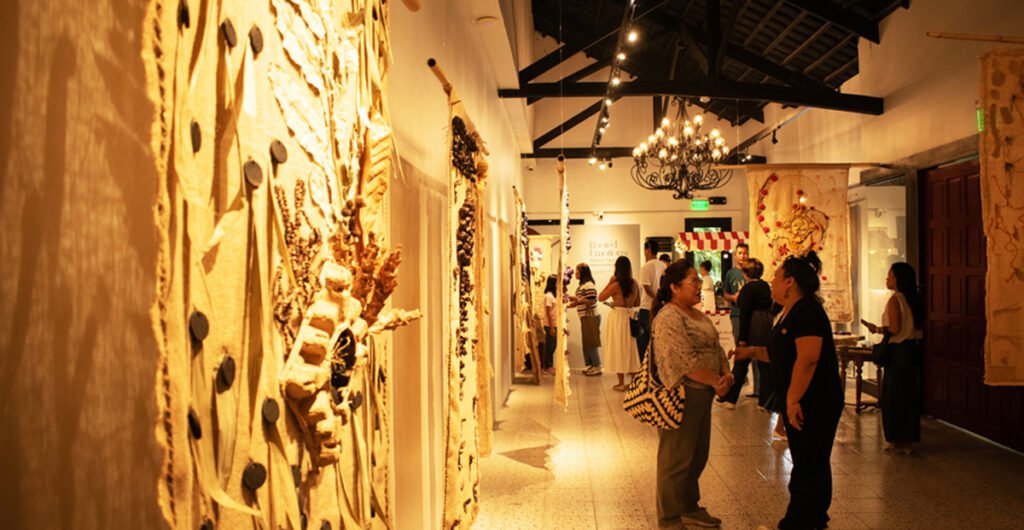
By mid-afternoon, sunlight filtered gently through the gallery windows, landing unevenly across woven surfaces, stitched fibers, and earth-toned assemblages. Shadows gathered inside the folds of jute and thread. From a distance, the pieces appeared almost geological – like fragments excavated from memory rather than artworks carefully arranged on white walls.
This was “Rooted Emotions: Nature’s Tapestry”, the latest exhibition by Sharon Rose “Dadang” Rafols, a collection that transforms natural and found materials into tactile meditations on vulnerability, healing, and emotional endurance.
Curated by Sabrina Skye Benito, the exhibit explores the quiet intersections between emotional life and the natural world through assemblages of jute, thread, terracotta, shells, dried leaves, crocheted forms, and organic fragments.
Yet the power of the exhibit lies not simply in what the materials are, but in what they become.
Inside Rafols’ hands, jute ceases to function merely as fiber. It becomes memory. Thread becomes tension. Knots become emotional residue. Frayed edges resemble wounds still in the process of healing.
Nothing in the exhibit feels decorative. Every texture appears emotionally charged.
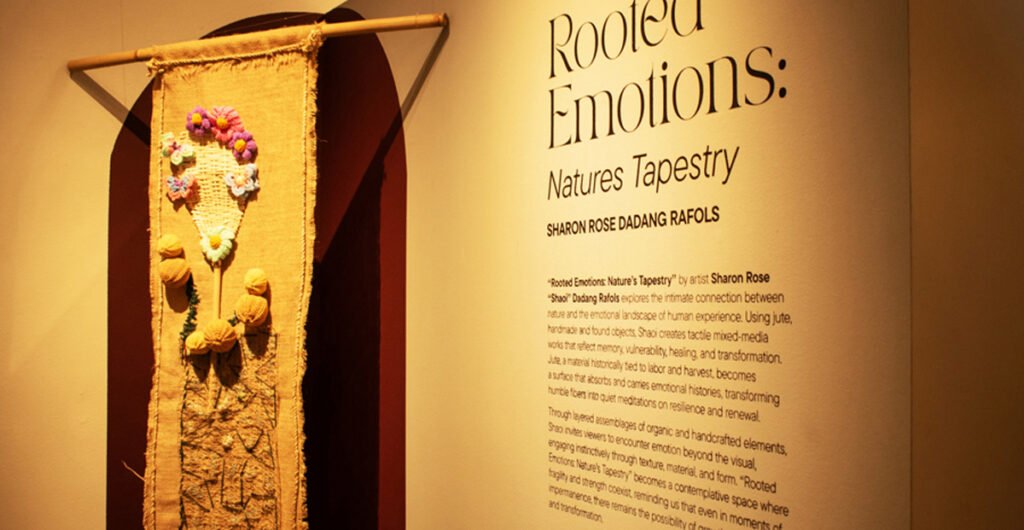
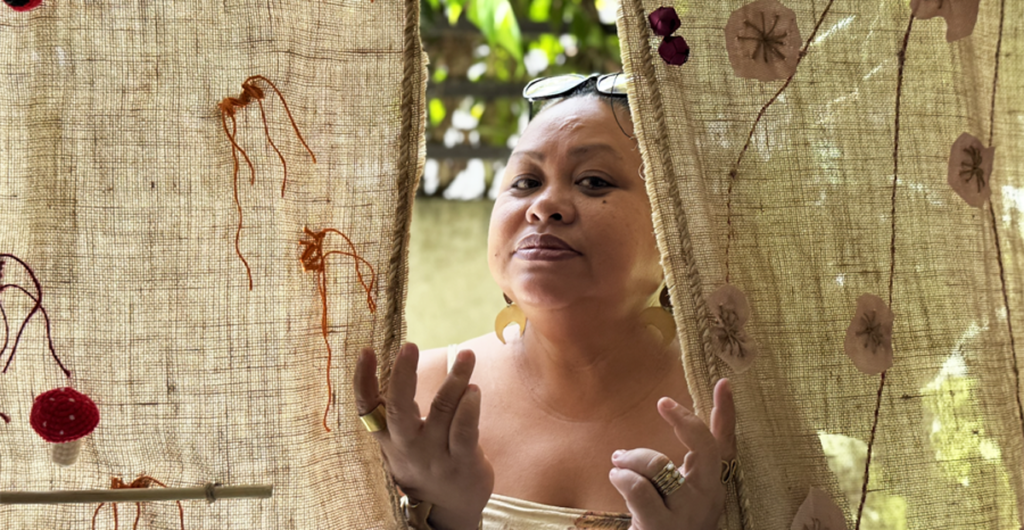
“Rooted Emotions grew out of a long period of listening,” Rafols said during a conversation about the collection. “Listening to my own inner landscape and to the quiet stories held by natural materials.”
The phrase captures the emotional logic of the exhibition. Rafols’ works do not impose meaning onto materials so much as uncover the histories already embedded within them. Jute, traditionally associated with labor and utility, retains traces of its working-class origins. The fibers carry associations of harvest, agriculture, touch, and endurance. Rather than refining those qualities away, Rafols amplifies them.
The result is an exhibition that feels deeply tactile in an increasingly digital culture.
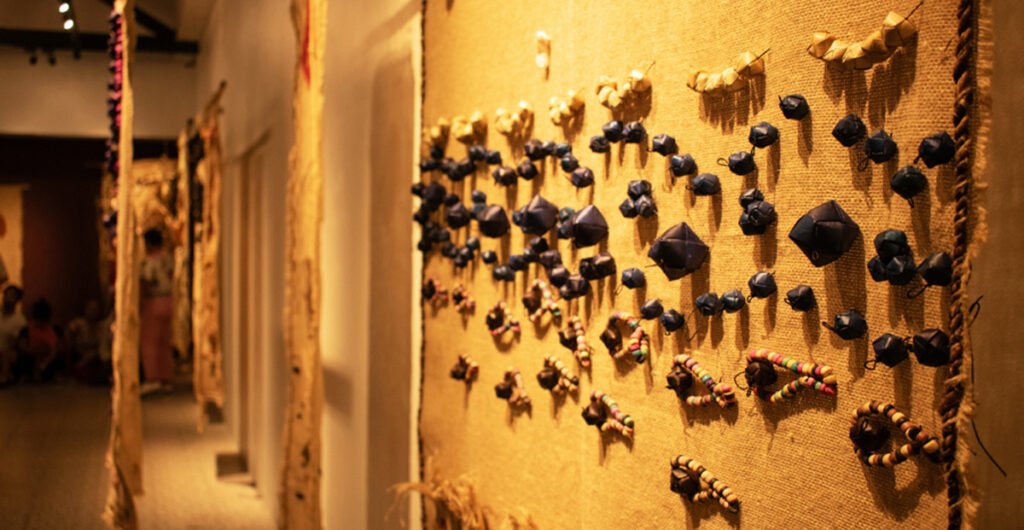
Standing before the works, viewers become acutely aware of texture. Coarse fibers press against softer stitched forms. Terracotta surfaces crack subtly under uneven pressure. Dried organic materials curl and fade naturally within the compositions. Nothing is polished into artificial perfection.
And that imperfection matters.
Throughout the exhibit, Rafols repeatedly returns to the idea that emotional life mirrors the rhythms of nature: growth, decay, rupture, renewal. Her materials physically embody those cycles. Fibers unravel like unresolved memories. Layered textures accumulate like emotional sediment. Bound threads hold tension the way bodies often do.
“Nature is both metaphor and collaborator in this collection,” Rafols explained. “Its textures, cycles, and imperfections mirror the emotional rhythms of being human.”
The works themselves seem to operate according to that philosophy. They resist neat resolution. Instead, they remain emotionally open-ended, allowing viewers to bring their own experiences into the spaces between fiber, clay, and thread.
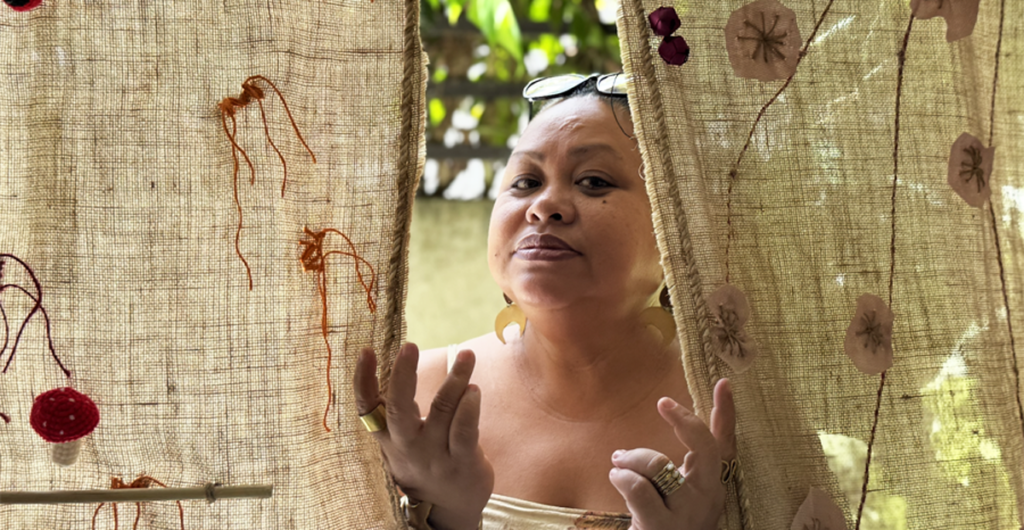
One of the exhibit’s most arresting works is a layered textile assemblage dominated by deep reds and rust-colored tones. At first glance, the piece appears almost architectural, dense with woven surfaces and stitched fragments. But closer inspection reveals exposed seams, tangled fibers, and sections that seem held together precariously by thread alone.
Rafols described the piece as especially personal.
“It required me to sit with emotions I had avoided for years,” she said. “The slow, repetitive stitching became a form of meditation, but also confrontation.”
That duality—meditation and confrontation—runs quietly through the entire collection.
There is tenderness in the work, certainly, but never sentimentality. Rafols does not romanticize healing or emotional vulnerability. Her pieces acknowledge fracture alongside repair. Certain materials appear weathered, strained, or incomplete. Others suggest careful preservation. Together, they create emotional landscapes that feel honest precisely because they refuse simplification.
The exhibit also carries subtle undertones of ritual and devotion. Wooden beads resemble prayer objects. Shells emerge like protective talismans. Repetitive stitching gestures evoke acts of care performed over time. Even the process of assembling found objects begins to resemble emotional archaeology- the careful gathering and preservation of fragments that might otherwise disappear.
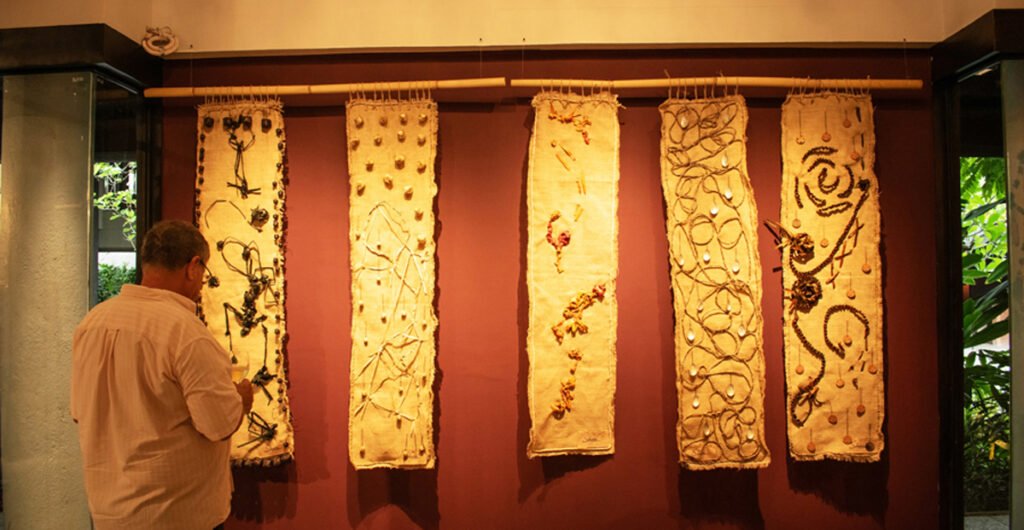
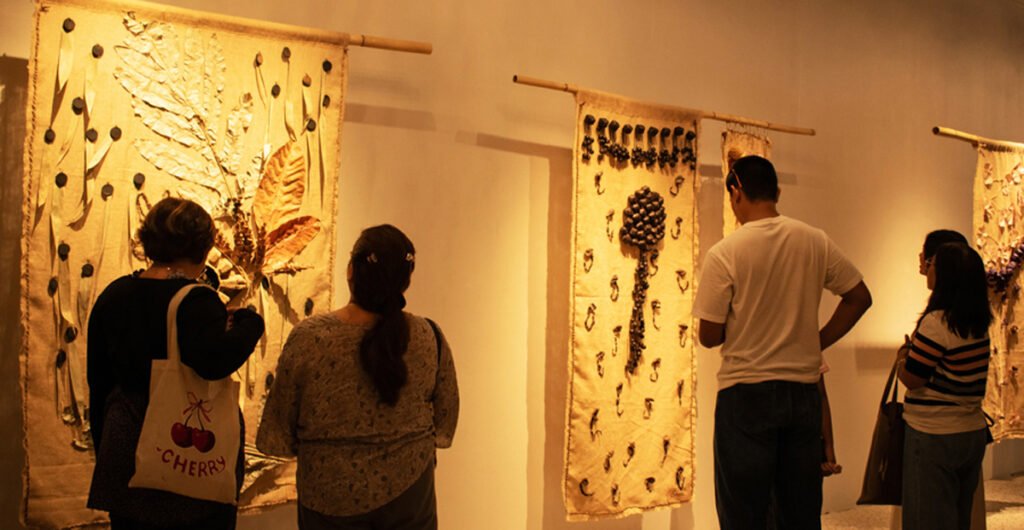
Importantly, Rafols allows the hand of the artist to remain visible throughout the work. In an era dominated by sleek production and digital polish, her commitment to handmade process feels quietly radical. Every stitch, fray, knot, or imperfection remains exposed.
“The process was slow and intuitive,” she said. “I allowed the materials to guide me, responding to their weight, texture, and resistance.”
Resistance is central to the exhibit’s emotional atmosphere.
The materials resist control. Emotions resist clarity. Healing resists linearity.
Even the pacing of the gallery encourages viewers to slow themselves against the velocity of everyday life. People move carefully through the exhibit, often lingering longer than expected before individual pieces. Conversations soften. Silence becomes part of the viewing experience.
At one point during the development of the collection, Rafols discovered that the humble Filipino vegetable saluyot serves as the raw source of jute fiber. The realization deepened her relationship with the material.
“Our humble saluyot,” she said, “is actually the raw material of jute. It reminded me that there is so much strength and possibility in materials we often overlook.”
The observation feels emblematic of the exhibit itself. Rafols consistently elevates the overlooked – not through spectacle, but through attention. Materials associated with labor, domesticity, or impermanence become vessels for emotional reflection.
That attentiveness extends into the exhibit’s recurring visual motifs. Frayed fibers symbolize vulnerability and memory. Knots suggest tension, resilience, and connection. Layered textures echo accumulated emotional experience. Earth tones ground the works firmly within natural cycles of decay and renewal.
“These elements repeat not as decoration,” Rafols explained, “but as emotional anchors.”
The phrase feels especially apt. The exhibition never overwhelms viewers with excessive symbolism or conceptual density. Instead, it creates space for emotional recognition. Visitors encounter the works not simply intellectually, but physically and instinctively.
And, perhaps, that is what makes “Rooted Emotions: Nature’s Tapestry” resonate so deeply. The exhibition understands that emotion often exists beyond language. Certain feelings cannot be explained cleanly. They must instead be carried through gesture, texture, repetition, and form.
Late into the afternoon, the gallery light began warming into gold, softening the rough surfaces of jute and clay. Shadows stretched longer against the walls. Visitors continued drifting quietly between the works, pausing before stitched surfaces and layered fibers as though searching for something familiar within them.
Outside, traffic continued. Phones buzzed. The city moved at its usual restless pace.
But inside the gallery, Rafols had constructed something increasingly rare: a space that trusted stillness.
Not emptiness. Not silence for its own sake. But stillness as a form of emotional attention.
“Nature doesn’t hide its scars,” Rafols reflected at one point during the conversation. “It transforms them.”
The line lingers long after leaving the exhibit because it captures the emotional truth at the center of the collection. Every exposed seam, weathered surface, and unraveling thread becomes evidence not only of fragility, but of survival.
In “Rooted Emotions: Nature’s Tapestry”, Sharon Rose Dadang Rafols reminds viewers that healing is rarely clean or complete. It frays. It knots. It layers itself slowly over time.
And sometimes, like the fibers woven carefully throughout her work, it holds. | NWI