
A total of 131 livelihood associations in the Negros Island Region (NIR) have received or are scheduled to receive P300,000 each in seed capital under the government’s PAyapa at MAsaganang PamayaNAn (PAMANA) program.
Dan Donald Candare, PAMANA project development officer 3 of the Department of Social Welfare and Development-NIR, said Sept. 22 that the program has allocated P39.3 million for the 131 PAMANA Livelihood Project Associations (PLPAs) in the region.
“The associations, with a combined membership of 1,969 individuals, are located in vulnerable and conflict-affected communities,” Candare told the Philippine News Agency.
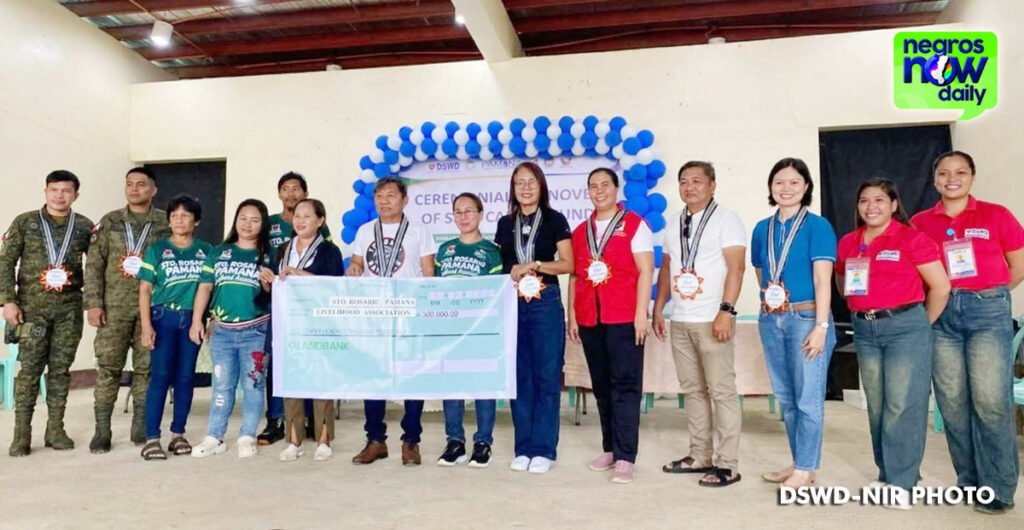
The livelihood funding is provided by the Office of the Presidential Adviser on Peace, Reconciliation and Unity (OPAPRU).
Of the 131 associations, 85 are in Negros Occidental and 46 in Negros Oriental.
Candare, who also serves as the focal person for the Peace and Development-Buong Bansa Mapayapa program, said checks for 51 associations have already been downloaded, and checks for 21 others are ready for turnover.
However, they remain on hold while awaiting exemption from the Commission on Elections ban related to the upcoming Barangay and Sangguniang Kabataan elections.
On Sept. 18, five PAMANA livelihood associations in Santa Catalina, Negros Oriental, received P300,000 each in seed capital during a ceremonial check turnover.
Each association will initially receive P300,000 under the Seed Capital Fund for the first phase of the livelihood project.
After several months of monitoring and assessment, qualified associations may receive an additional P300,000 under the Project Development Advancement Grant for the second phase.
The associations will undergo further assessment of their microenterprises and may qualify for an incentive grant based on their performance.
Common livelihood activities include purchasing agricultural supplies, such as seeds and fertilizers, general merchandising through sari-sari stores, rice retailing, and transportation services.
The program aims to promote peacebuilding, provide stable alternative sources of income, and empower former rebels, victims of violent extremism, and underserved grassroots communities. ||