
The Department of Agriculture (DA) warned rice retailers, traders, and importers that violators of the government’s newly imposed price ceiling on imported rice could face jail time, million-peso fines, and even business closures under the Price Act.
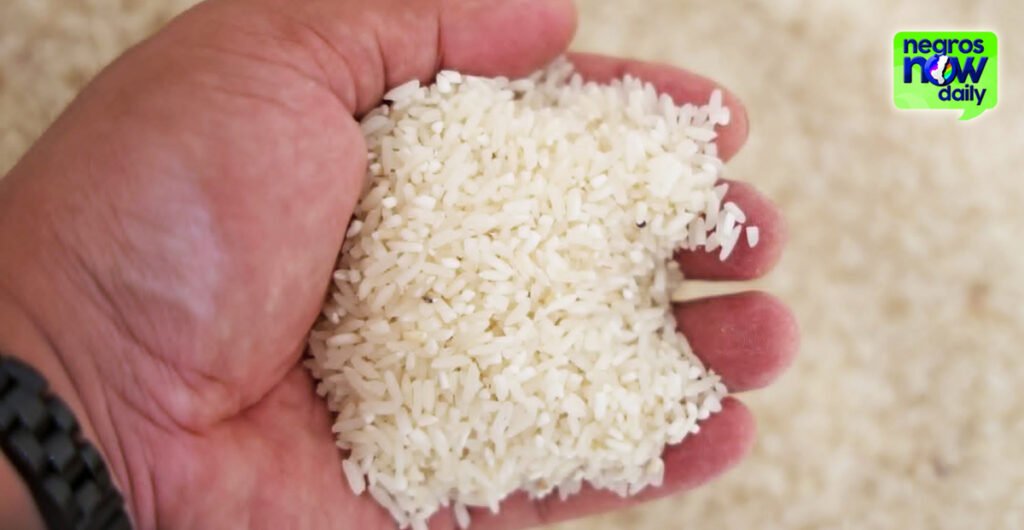
President Ferdinand Marcos Jr. ordered a 30-day price ceiling on imported five percent broken rice to curb what officials described as unjustified retail prices despite easing global rice costs and reduced import tariffs.
Agriculture Secretary Francisco Tiu Laurel Jr. said the new measure gives the government stronger legal authority compared with earlier pricing interventions.
“Unlike the previous maximum suggested retail price that depended largely on moral suasion and voluntary compliance, the mandated price ceiling now allows the Department of Agriculture to impose punitive sanctions and fines on violators,” Tiu Laurel said in a statement May 17.
Under Republic Act 7581, or the Price Act, violators of a government-imposed price ceiling on basic necessities may face imprisonment of one to 10 years, fines ranging from P5,000 to P1 million, or both, depending on the court’s discretion.
Rice is classified as a basic necessity under the law, placing it under the regulatory powers of the DA during periods of excessive or unreasonable price increases.
Aside from criminal penalties, the DA may also impose administrative sanctions under the implementing rules of the Price Act. These include temporary or permanent closure of establishments, confiscation or seizure of products involved in the violation, suspension or revocation of permits and licenses, and the issuance of cease-and-desist orders.
Administrative fines ranging from P1,000 to P1 million may also be imposed on erring establishments, the DA said, adding the law further states that officers or employees of corporations found violating the price ceiling may be held personally liable.
It added that monitoring teams and inspectors would intensify checks in public markets, supermarkets, and rice retail outlets nationwide during the 30-day implementation period. The price ceiling may be modified, extended, or removed after a review.
Officials said the temporary price ceiling aims to shield consumers from profiteering and unreasonable price increases while helping stabilize rice prices amid persistent food inflation pressures affecting households.
Marcos’ Executive Order 118, which imposes a P50-per-kilo cap on five percent broken imported rice for 30 days, takes effect immediately upon publication in the Official Gazette or a newspaper of general circulation.
“We will implement this immediately once it takes effect to help the general public cope with rising food costs,” Tiu Laurel Jr. stressed, adding the DA is empowered under the Price Act and the Anti-Agricultural Economic Sabotage law to pursue hoarders, profiteers, cartels, and other market manipulators.
Inflation has accelerated sharply since oil prices surged following the outbreak of conflict in the Middle East Feb. 28. Headline inflation climbed to 4.1 percent in March and further to 7.2 percent in April, from 2.4 percent in February and 1.4 percent in April last year. Food inflation alone jumped to 6.1 percent in April from 2.7 percent in March, underscoring mounting pressure on household budgets.
Rice remains one of the most politically and economically sensitive commodities in the country, accounting for roughly nine percent of the consumer basket used to measure inflation. For the poorest 30 percent of Filipino households, rice accounts for nearly one-fifth of household spending, making price spikes particularly painful for low-income families.
The DA said the temporary price cap complements earlier interventions aimed at easing inflation and stabilizing food prices. These include the rollout of the government’s P20-per-kilo rice program and the implementation of a maximum suggested retail price mechanism for imported rice, both of which helped temper rice prices before the recent oil-driven inflation surge. ||