
• GILBERT P. BAYORAN
The Philippine Institute of Volcanology and Seismology (Phivolcs) clarified on Monday, May 11 that the glowing crater observed at Mount Kanlaon is caused by a superheated volcanic plume, not by any lava flow.
However, Phivolcs raised the possibility of rising magma activity after a visible crater glow, locally known as “banaag,” was observed at the summit over the weekend.
Phivolcs Director Teresito Bacolcol said that the volcano has been emitting hot volcanic gases since 2024.
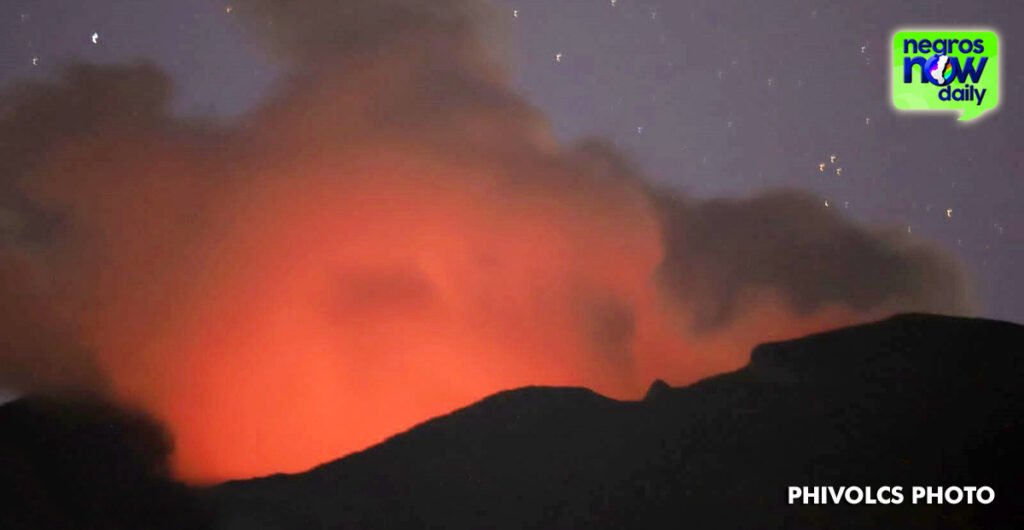
Bacolcol noted that the emissions have become visible under current conditions due to ash activity and the intensity of heat coming from Kanlaon Volcano.
He said the superheated volcanic plume contains a mixture of water vapor, sulfur dioxide, carbon dioxide, hydrogen sulfide, hot ash, and extremely high temperatures that can reach up to 500 degrees Celsius.
Phivolcs personnel at the Kanlaon Volcano Observatory in Negros Occidental observed the crater glow with the naked eye at around 7 p.m. on May 10.
The phenomenon followed months of monitoring superheated volcanic gas emissions at the volcano’s summit crater through infrared and high-resolution cameras.
Bacolcol said they are not ruling out possible developments as Kanlaon Volcano remains under Alert Level 2.
“If crater glow becomes sustained and intensifies, this would indicate that magma is close or at the crater and could warn of increasing chances of magmatic unrest within days,” the Phivolcs advisory said.
It also noted that superheated gas activity has persisted since November 2024 and became more frequent beginning April 13 this year.
Despite the new development, Phivolcs said monitoring parameters at Kanlaon Volcano have remained generally unchanged since its moderately explosive eruption on March 15. | GB