
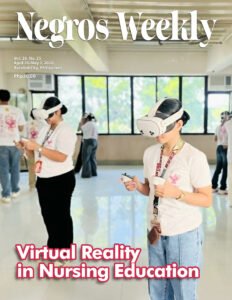
A mother in her first trimester struggles with persistent nausea and severe vomiting, known in the medical field as hyperemesis gravidarum. A nurse steps in to help. But this is not happening in a hospital, a clinic, or even a barangay health center. Instead, it unfolds in a virtual space.
Wearing a headset and holding controllers, a student nurse assesses the patient, thinks through the situation, and responds accordingly. There is no real patient at risk, yet the pressure feels real. This is a new frontier being embraced by the Colegio San Agustin-Bacolod (CSA-B) Nursing Program.
In the wake of the pandemic, nursing education has continued to evolve. With the increasing complexity of healthcare and the need to ensure patient safety, educators are exploring new ways to better prepare students for real clinical situations.
At CSA-B, this commitment is evident through the enhancement of their hospital-simulated facilities at the Villa San Agustin Campus and the integration of virtual reality (VR) into their teaching approach.
This innovation was recently highlighted during the Nursing Informatics Grand Culmination held from April 22 to 25. Around 250 Level 2 nursing students participated in a four-day immersive learning experience, allowing them to engage in simulated clinical scenarios without the risks associated with real patients.
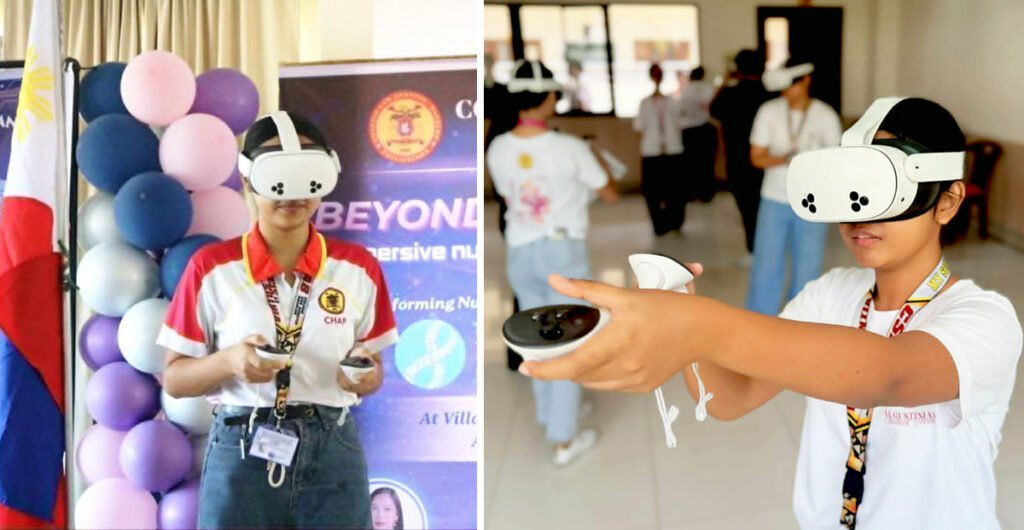
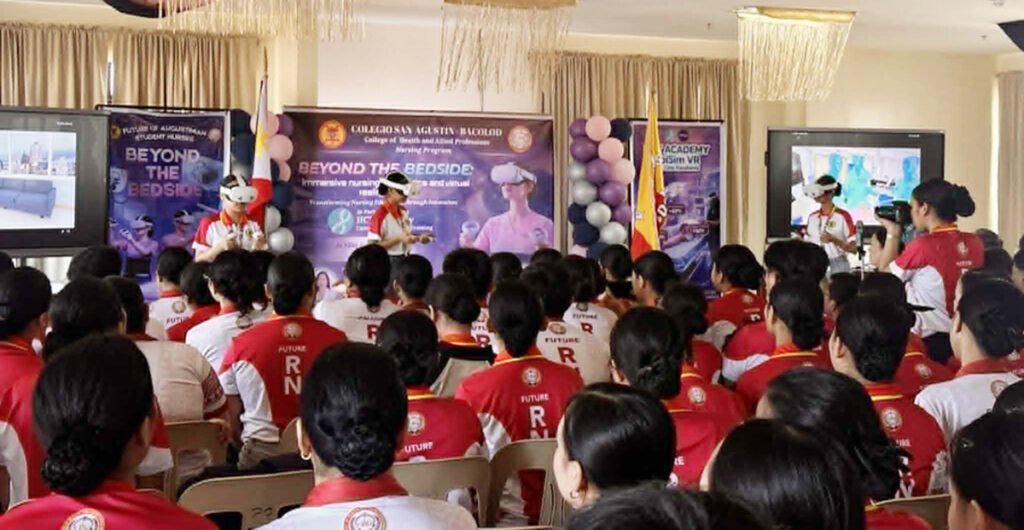
During the activity, students were grouped into teams of three, each assigned a specific role: Team Leader, Medication Nurse, and Staff Nurse. Inside the virtual environment, they entered patient rooms, addressed concerns, and carried out necessary interventions.
The setup allowed them to pause, think critically, and rely on teamwork to complete tasks effectively. Through repeated exposure, students were able to strengthen not only their clinical skills but also their confidence and decision-making abilities.
Members of the CSA-B Nursing Informatics Team, composed of trained and technology-oriented educators, observed encouraging results. Based on feedback gathered after the simulations, many students shared that they felt more prepared to face real-life clinical situations. The immersive experience allowed them to engage more deeply compared to traditional classroom discussions or lectures.
As technology continues to develop, its role in healthcare education becomes more significant. For nursing students, learning is no longer limited to the four corners of a classroom. It can take place in a virtual ward, a home care setting, or any clinical scenario designed to reflect real-life situations.
Virtual reality, in this sense, does not replace traditional training but complements it. It provides a safe space for students to practice, make decisions, and learn from their experiences before entering actual clinical environments.
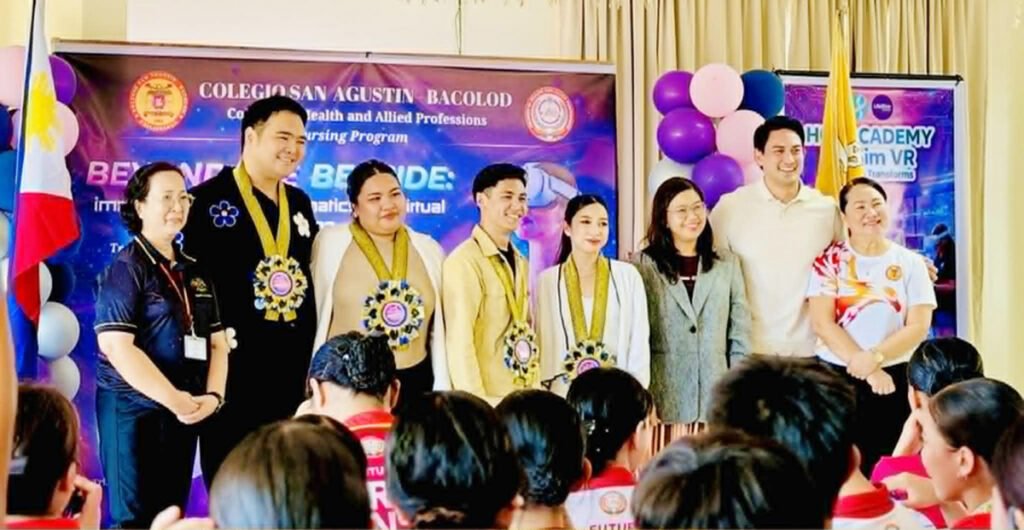
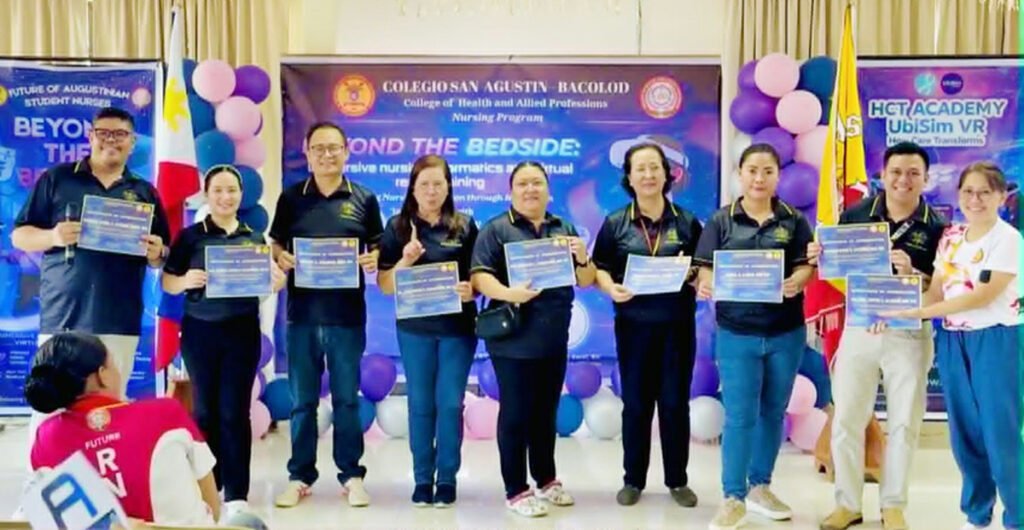
The success of this initiative was made possible through CSA-B’s partnership with HCT Academy, which brought in four simulationists and registered nurses Apple Grace Parajas, Alexander Herrera, Trishia Umali, RN and Justine Brian Escal, who guided the students throughout the activity.
The Grand Simulation was spearheaded by the Nursing Informatics Team: Vincent Solidum, Chantel Spring Saludares, Prince June Kitane, Ana Victoria Chuayana, April Loro, Ma. Luisa Reggie Panaguiton, Razzel Joyce Alunan, and Ma. Fe Tabujara. The initiative was fully supported by the Dean of the Nursing Program, Dr. Jo Ann Flores, Dean of the College of Health and Allied Professions, Dr. Reyma Magbanua, and CSA-B School President, Fr. Rene Jose “Bong” Delariarte.
Through efforts like this, the CSA-B Nursing Program continues to move forward in shaping future nurses, equipping them with the skills, confidence, and adaptability needed in an ever-changing healthcare environment. | Prince June Kitane/CSA-B Nursing Program Grand Simulation Documentary Committee photos