
The construction of Cell No. 5 at the city’s sanitary landfill in Barangay Felisa will address pressing waste disposal needs while serving as a critical foundation for Bacolod’s waste-to-energy (WTE) project, Mayor Greg Gasataya said.
Gasataya, during the ceremonial groundbreaking Jan. 29, stressed that the almost P66-million Cell No. 5 project will not only provide an immediate solution to the city’s growing waste problem but will also lay the groundwork for the WTE project being developed, in partnership with the Department of Energy (DOE) and the DENR-Environmental Management Bureau.
“We should make a decisive undertaking to ensure an efficient solid waste management program,” he added.
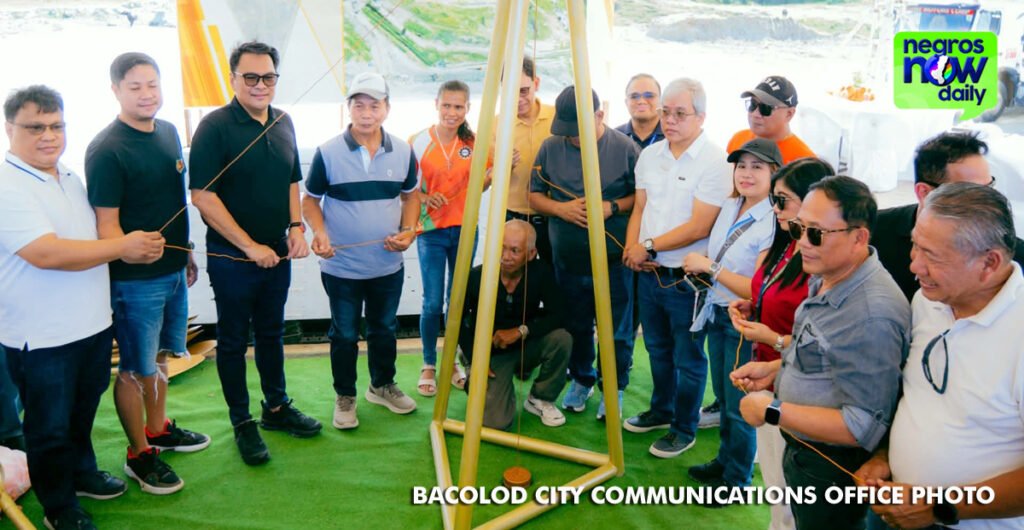
Councilor Homer Bais emphasized the infrastructure’s importance, noting that it strengthens the city’s waste management efforts under the current administration.
Cell No. 5 is designed to have a landfill lifespan of up to three years. However, according to Mario Sandil, operations manager of International Solid Waste Integrated Management Specialists, the facility’s operational life may be extended once the waste-to-energy project becomes fully operational.
“We are hoping that this will be the last landfill cell, as the city is now working on the WTE project that will eventually reduce our residual waste,” Gasataya said in a city press release.
The mayor recently signed a memorandum of agreement with DOE Secretary Sharon Garin for the WTE initiative, which he called a “game-changer” for Bacolod’s solid waste management.
Under the agreement, the DENR-EMB will conduct the project’s feasibility study, while DOE will provide full technical support for successful implementation. The WTE project is expected to cut residual waste volumes, create economic opportunities, and boost the city’s environmental protection efforts.
In line with the administration’s commitment to transparency, the City Engineer’s Office, in coordination with the Management Information Technology and Communications Services (MITCS), also launched the QR code system for infrastructure projects.
A QR code for the Cell No. 5 construction was included in the project billboard, and CEO officer-in-charge, Engr. Loben Ceballos, said that related info can be accessed via the code, and anyone can even give feedback.
MITCS OIC Edrian Roel Robete added that project updates will be available via the QR link, which will later be posted on the city government’s official online platforms.
This initiative aligns with Executive Order 39, which establishes project transparency through standardized billboards with QR codes, and an online progress monitoring system, the city said. ||