• CHERYL G. CRUZ
The Philippine Drug Enforcement Agency iterated its caution against cactus species lophophora williamsii, or peyote, which contains the hallucinogen mescaline.
Mescaline is a dangerous drug listed in the 1971 UN Convention on Psychotropic Substances, and Republic Act 9165, or the Comprehensive Dangerous Drugs Act of 2002, the PDEA said in an advisory Jan. 12.
It is controlled due to the adverse effects caused by its administration to the body, it added.
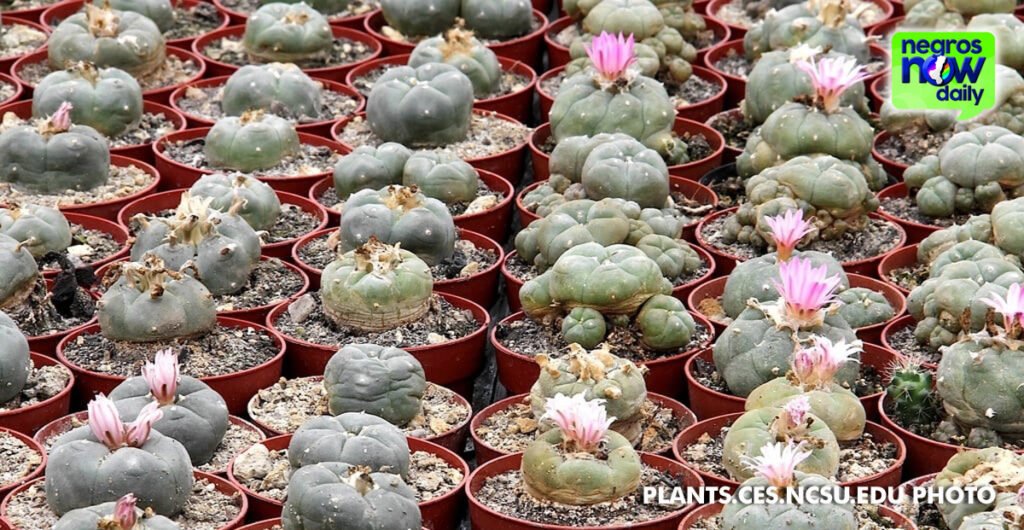
“Mescaline is naturally present in peyote cacti. Lophophora are a distinct group of cacti characterized by their small, spineless, and globular appearance,” the PDEA said, adding that while there are several species within the genus lophophora, only lophophora williamsii contains mescaline.
The advisory is to inform the public of the dangers of mescaline, the agency said, adding it is committed to protect the public from substances that threaten their health and safety. | CGC